10 Home Organization Ideas for a Clutter-Free Home
A home can feel messy even when it is clean. Shoes by the door, papers on the counter, toys in the living room, and everyday items without a proper place can quickly make a room feel crowded.
The good news is that home organization does not require a complete makeover. Small storage changes and better everyday habits can make it much easier to keep things in order.
These home organization ideas focus on practical ways to reduce clutter, use available space wisely, and make everyday items easier to find. Start with one area and build from there.
For more ideas for a well-organized home, explore the LivingNovaHub Home Organization category.
1. Give Everything a Designated Place
One of the simplest ways to keep clutter under control is to give frequently used items a specific home. When something does not have a clear place, it is much more likely to end up on a table, chair, or countertop.
Start with the things you use every day. Keys can stay in a small tray near the entrance, blankets can go into a basket, and important papers can have a dedicated drawer or folder.
The goal is not to organize every single item at once. Focus first on the objects that regularly create visible clutter.
2. Use Baskets to Hide Everyday Clutter
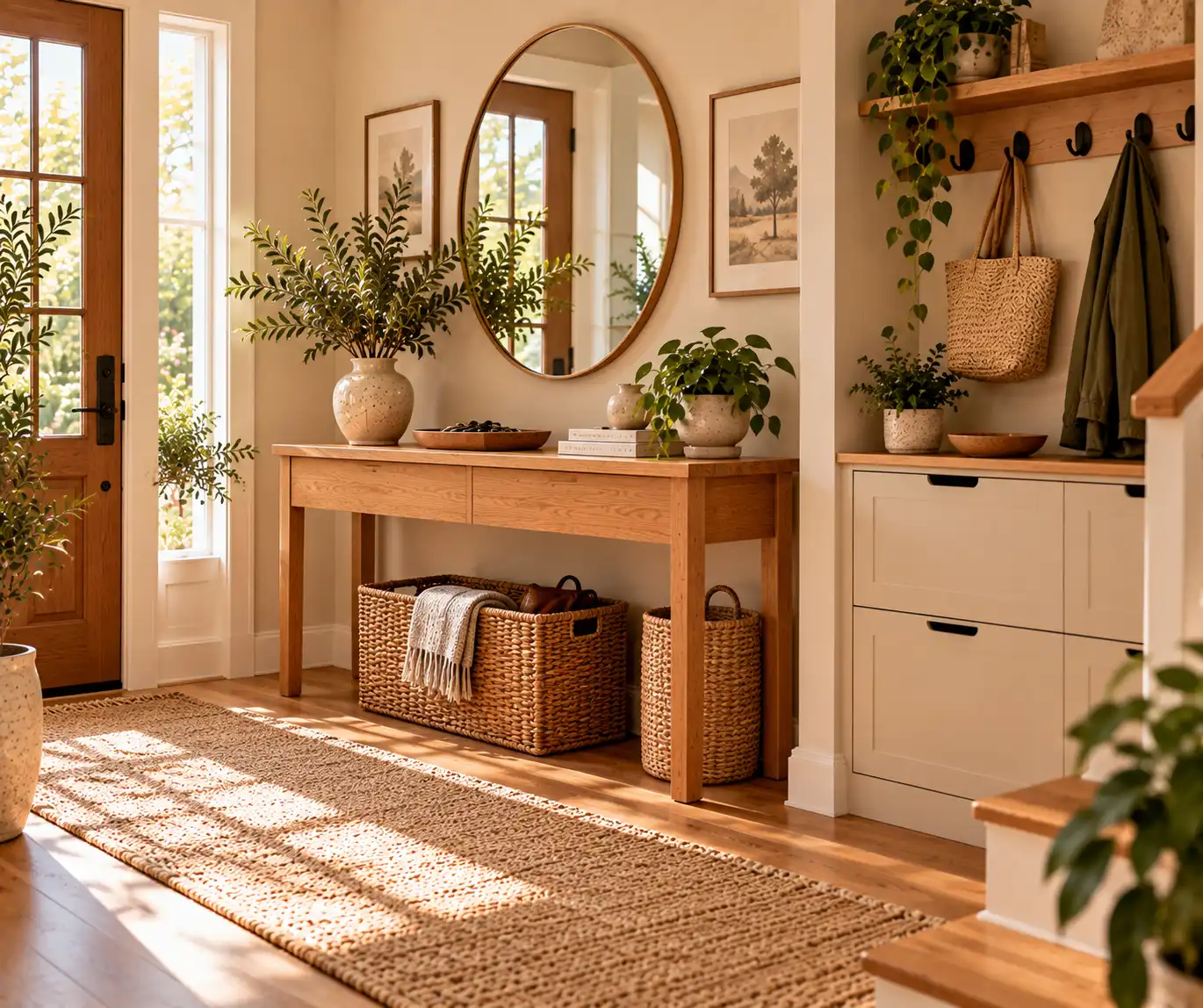
Baskets are useful because they make storage look intentional while keeping small items together. They work well in living rooms, bedrooms, bathrooms, and entryways.
Use larger baskets for blankets and pillows, medium baskets for toys or accessories, and smaller ones for items that tend to collect on shelves or counters.
Choose materials that fit your room. Woven baskets can add natural texture to a neutral interior, while fabric or structured baskets can create a cleaner look.
3. Make Use of Vertical Space
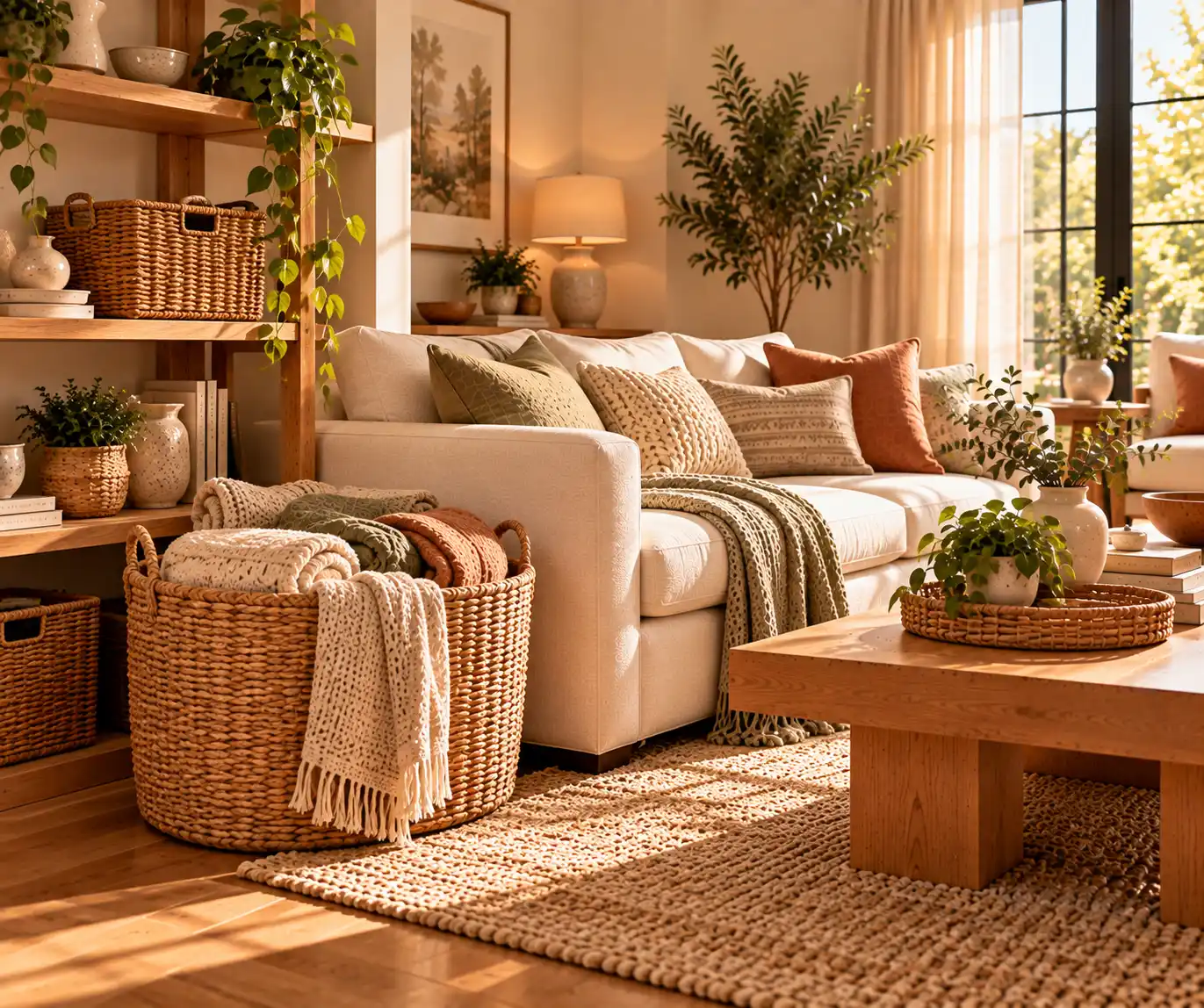
When floor space is limited, look upward. Walls can provide useful storage without taking up much room.
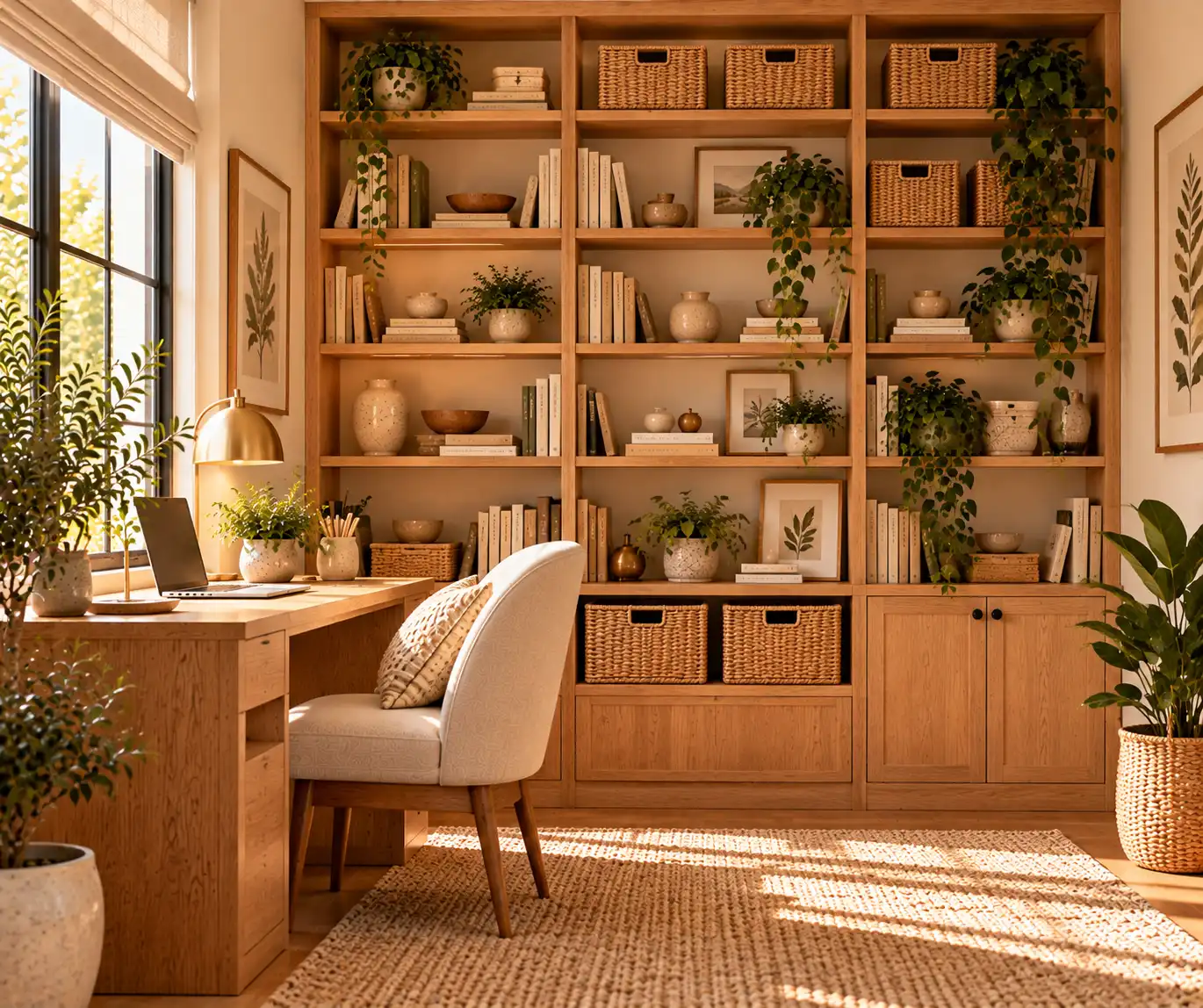
Tall bookcases, wall-mounted shelves, pegboards, and vertical cabinets can help organize books, kitchen items, accessories, or decorative pieces.
Keep heavier everyday items in sturdy storage and use higher shelves for things you do not need frequently. This keeps useful items accessible without allowing the room to feel crowded.
4. Organize One Drawer at a Time
Drawers can hide clutter, but they can also become difficult to use when everything is mixed together. You do not need to organize every drawer in the house in one day.
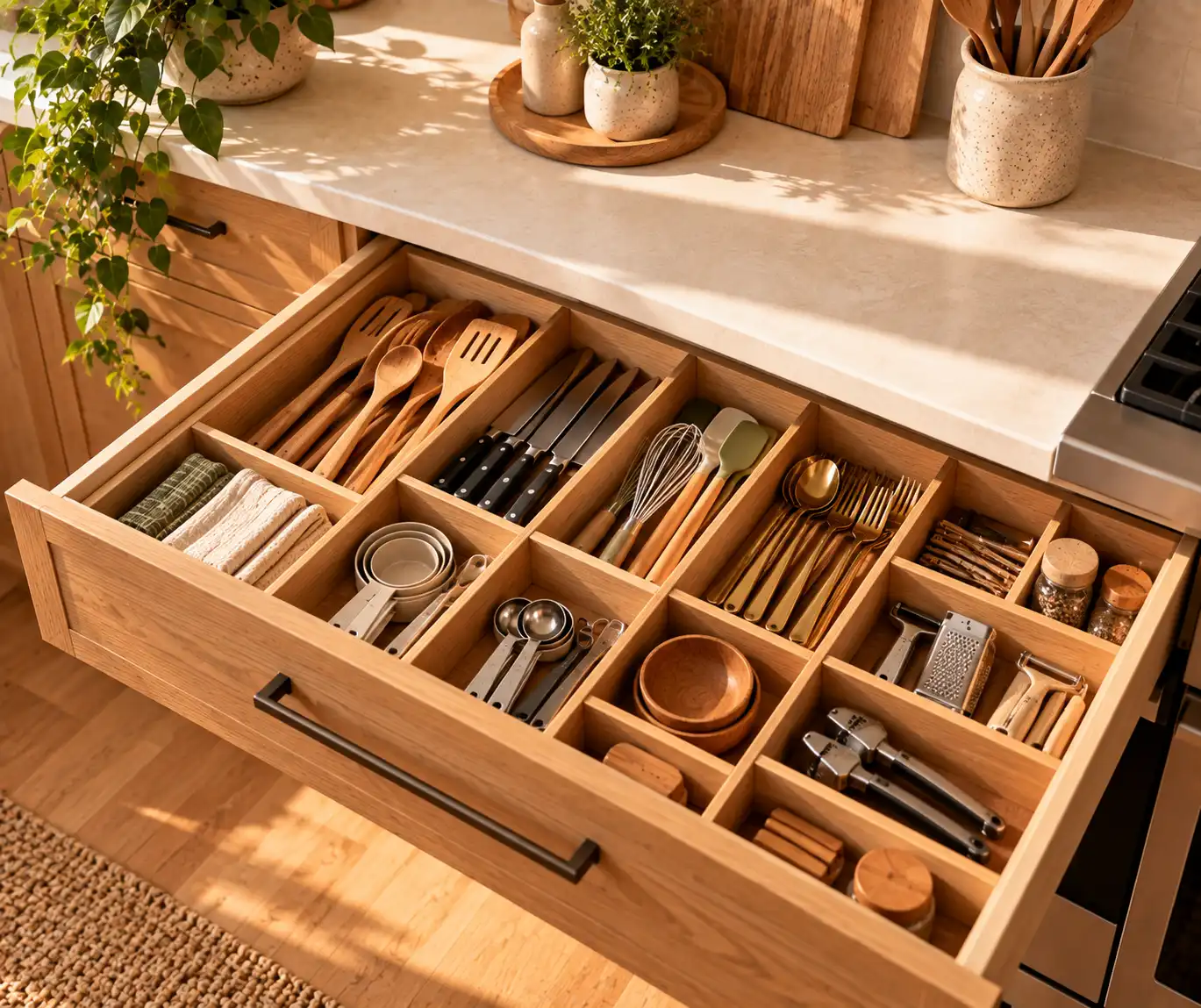
Choose one drawer that causes the most frustration. Empty it, remove anything that does not belong there, and group similar items together before putting everything back.
Simple dividers or small containers can help keep categories separate. The same approach works in bathroom drawers, kitchen cabinets, bedside tables, and home office storage.
5. Keep Kitchen Counters Clear
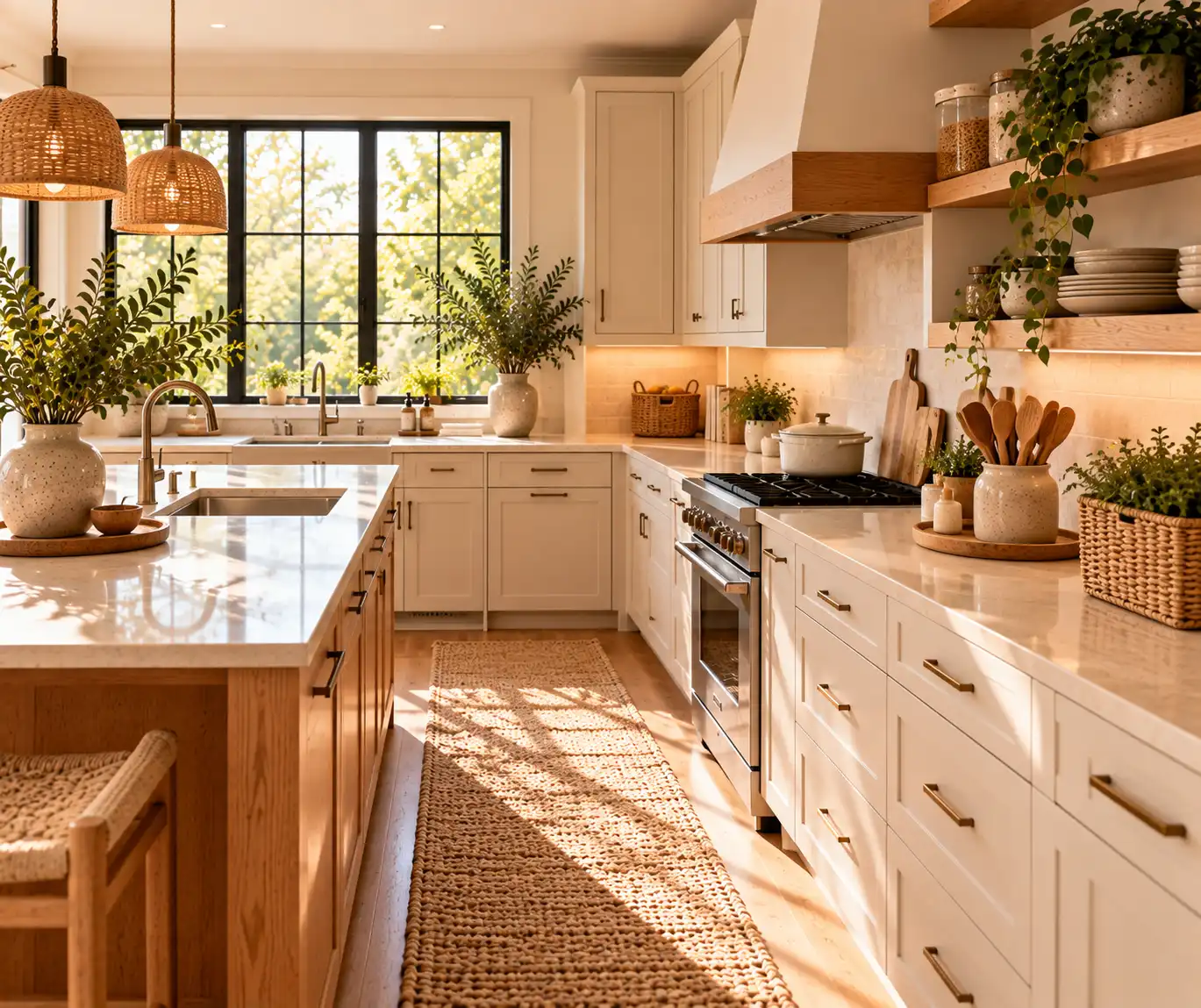
Kitchen counters often become a collection point for appliances, mail, groceries, dishes, and other everyday items. Keeping the most visible surfaces clear can make the whole kitchen feel more organized.
Start by deciding which appliances you use often enough to leave out. Less frequently used items can be stored inside cabinets or a pantry when practical.
Use a tray for small items that genuinely need to stay on the counter. Grouping them together looks more intentional than having several separate objects scattered around the workspace.
6. Create a Simple Drop Zone Near the Door
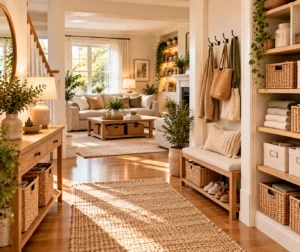
The entrance to your home is often where clutter starts. Bags, shoes, jackets, keys, and mail can quickly collect when there is no convenient place for them.
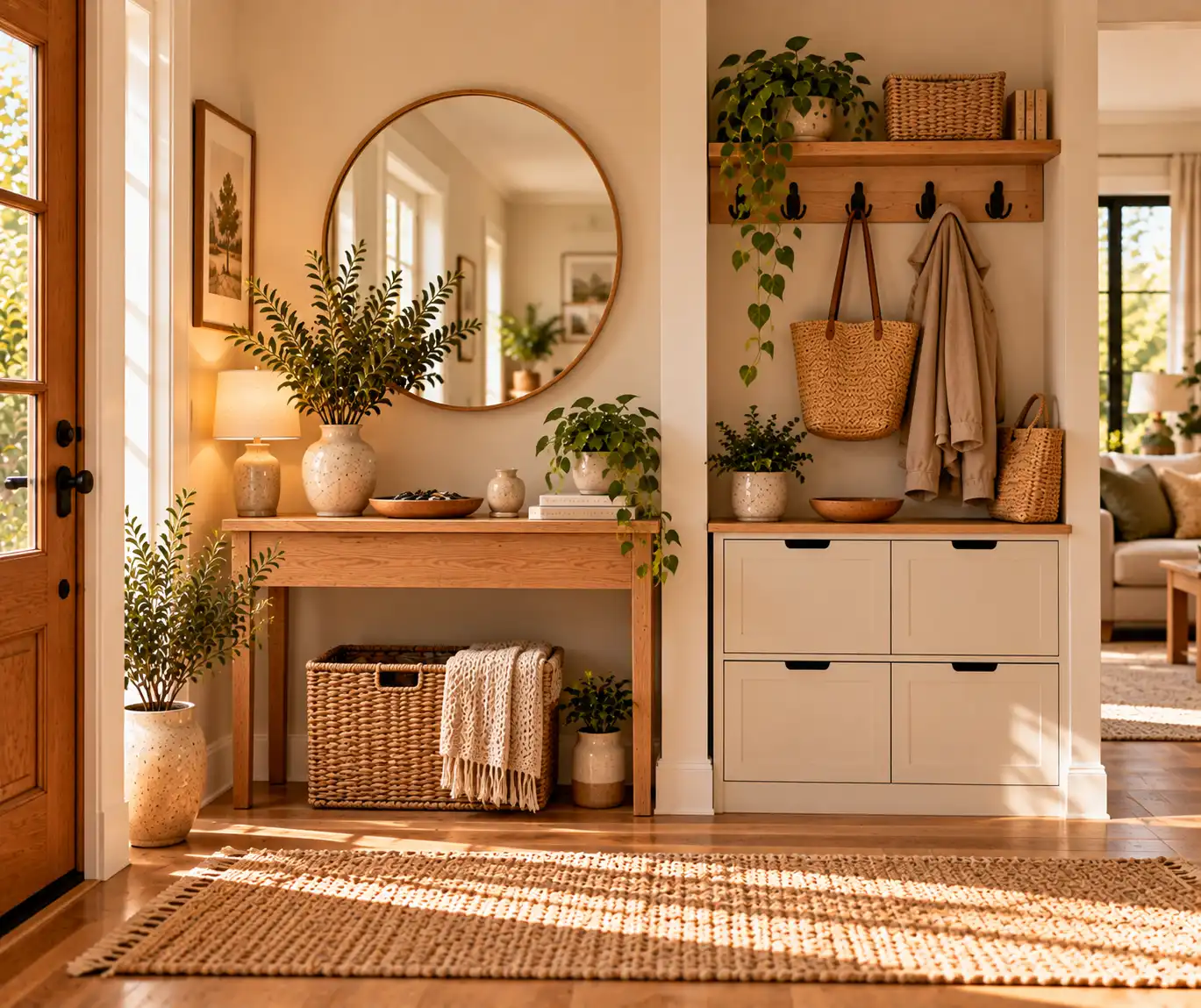
A small drop zone can solve much of this problem. Depending on your space, it could include wall hooks, a narrow console, a shoe cabinet, a basket, or a small tray.
Keep the setup easy to use. If putting something away requires several steps, everyday items are more likely to end up somewhere else.
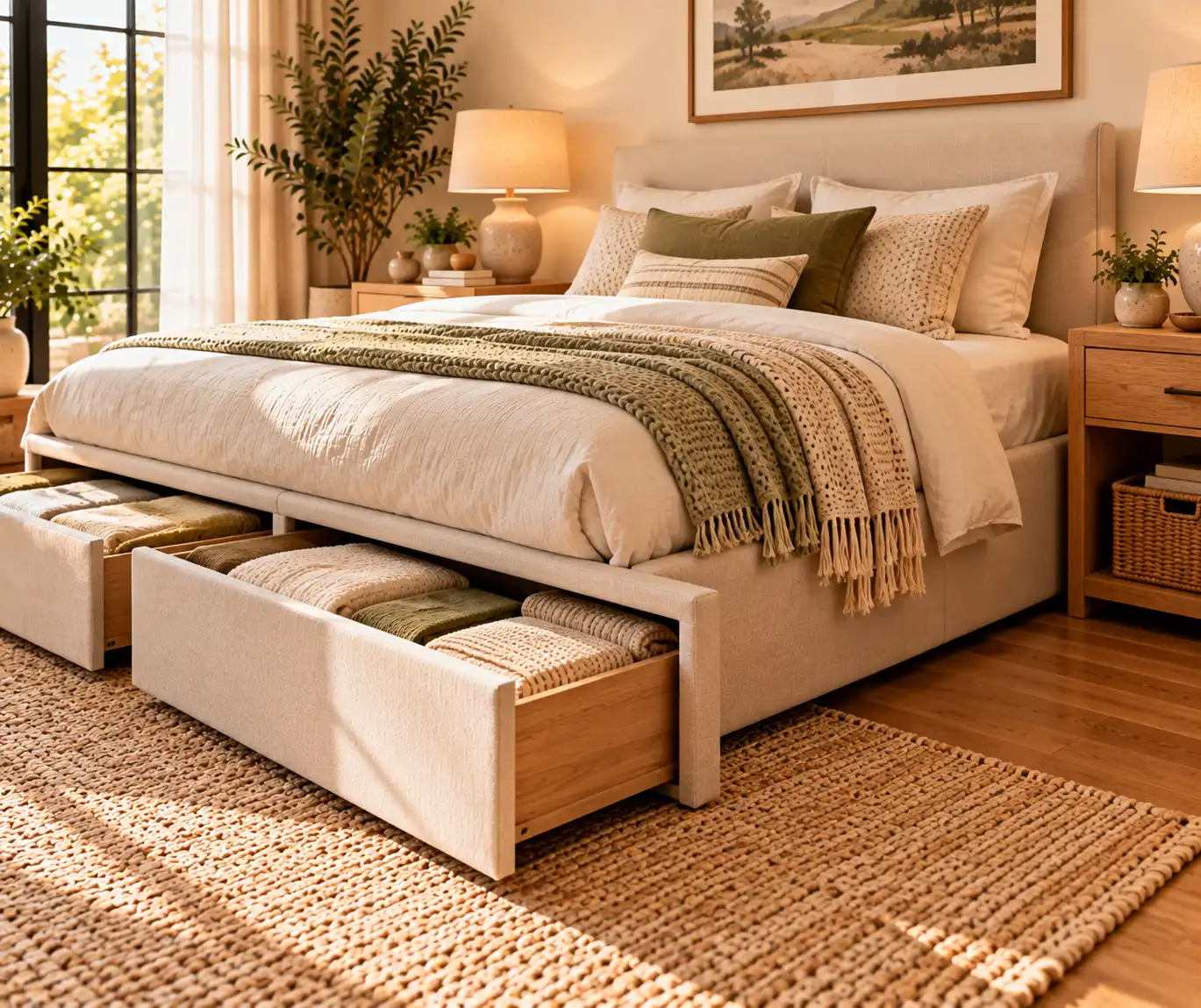
7. Use Under-Bed Storage
The space underneath a bed can provide useful storage, especially in bedrooms where floor space is limited.
Storage boxes, shallow containers, or built-in drawers can hold seasonal clothing, spare bedding, or other items that do not need to be accessed every day.
Keep stored items grouped and labeled when possible. Avoid filling the entire area with random belongings, or the storage space can quickly become difficult to manage.
8. Turn Open Shelves Into Intentional Storage
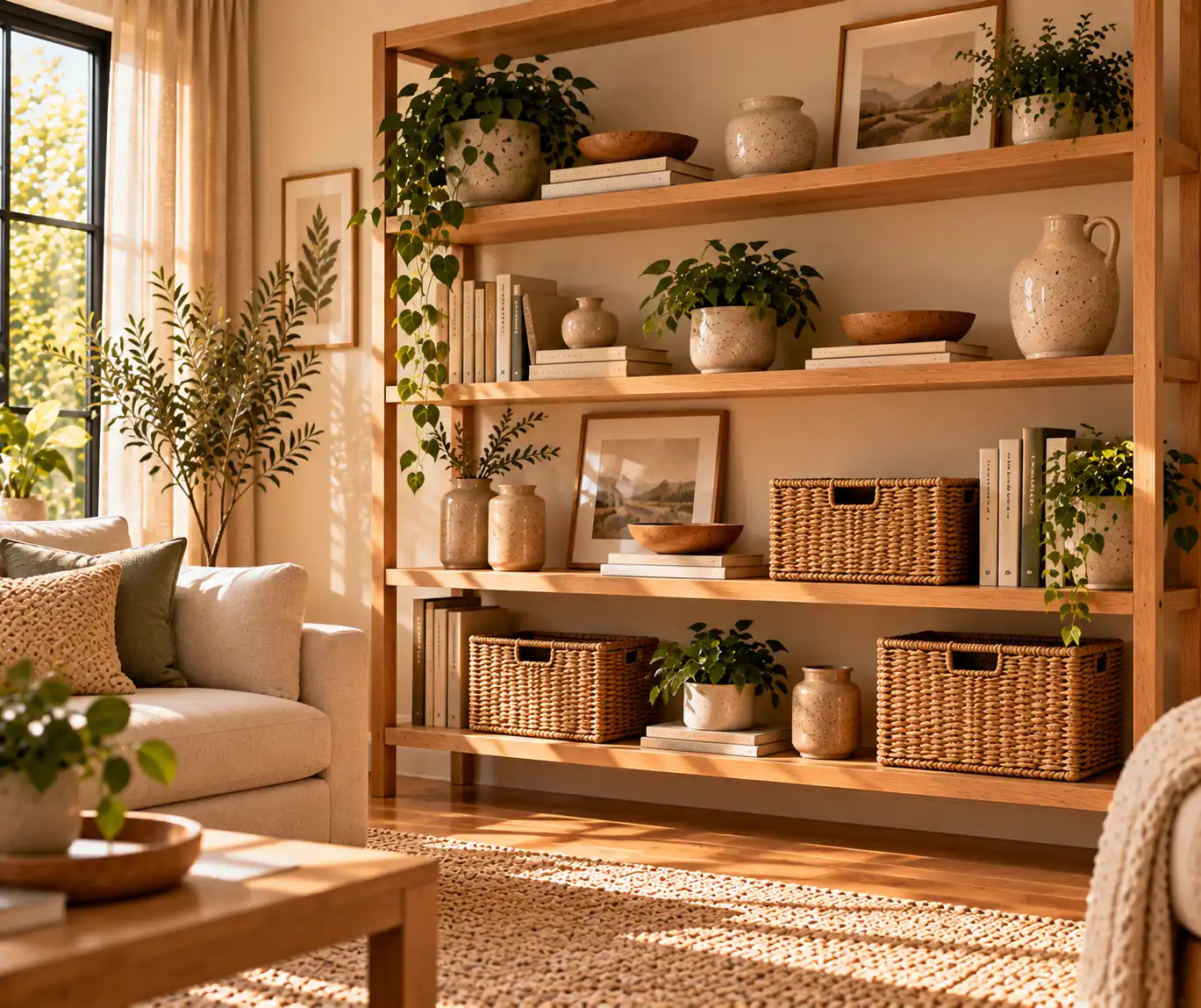
Open shelves can be useful, but they can also make a room look cluttered when too many items are displayed together.
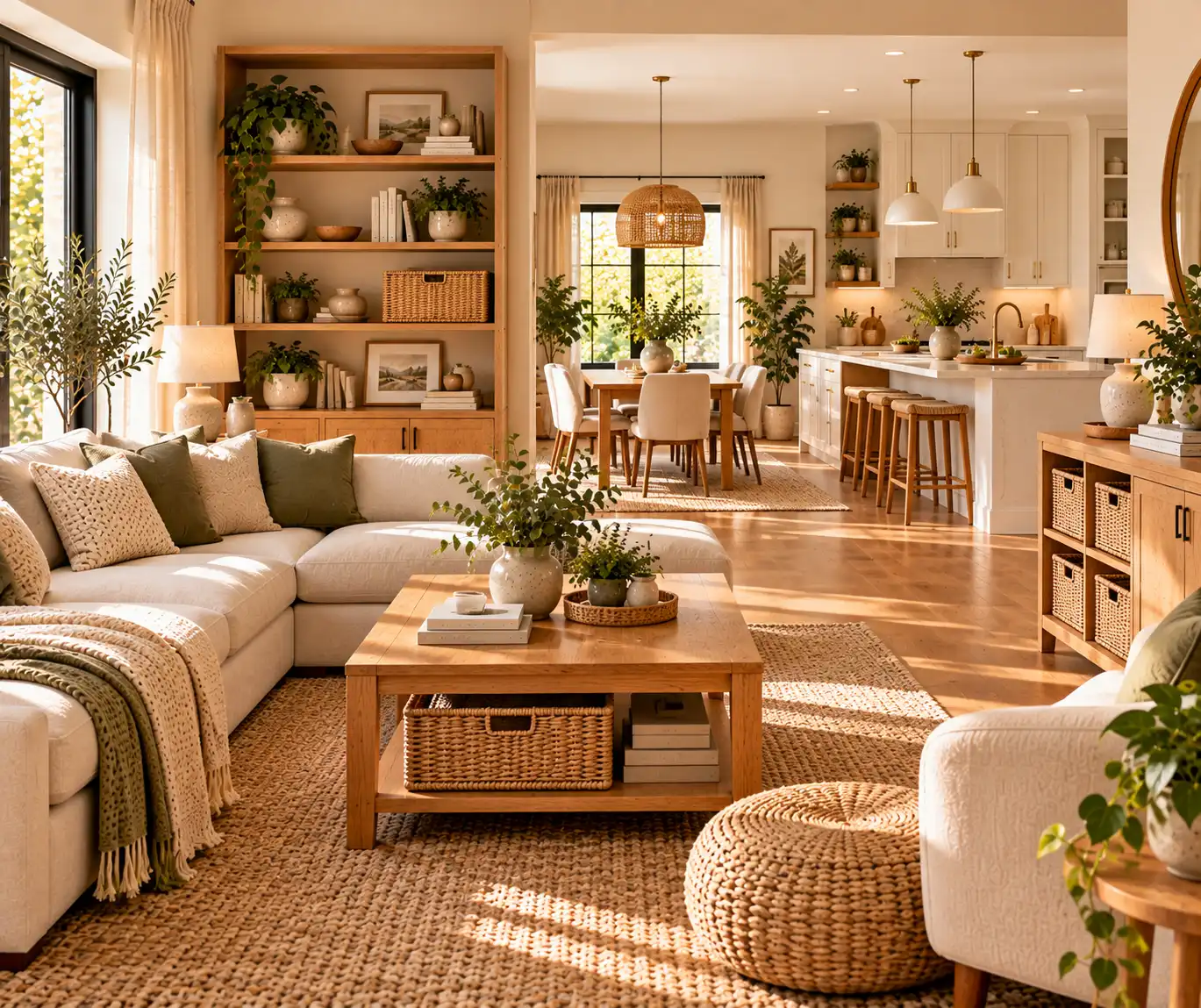
Group similar objects and leave some empty space between them. Books, baskets, ceramics, framed artwork, and small plants can be mixed without filling every shelf.
Use attractive containers for smaller items that you want nearby but do not necessarily want on display. This gives open shelving a cleaner appearance while keeping it functional.
9. Create a Home for Paperwork
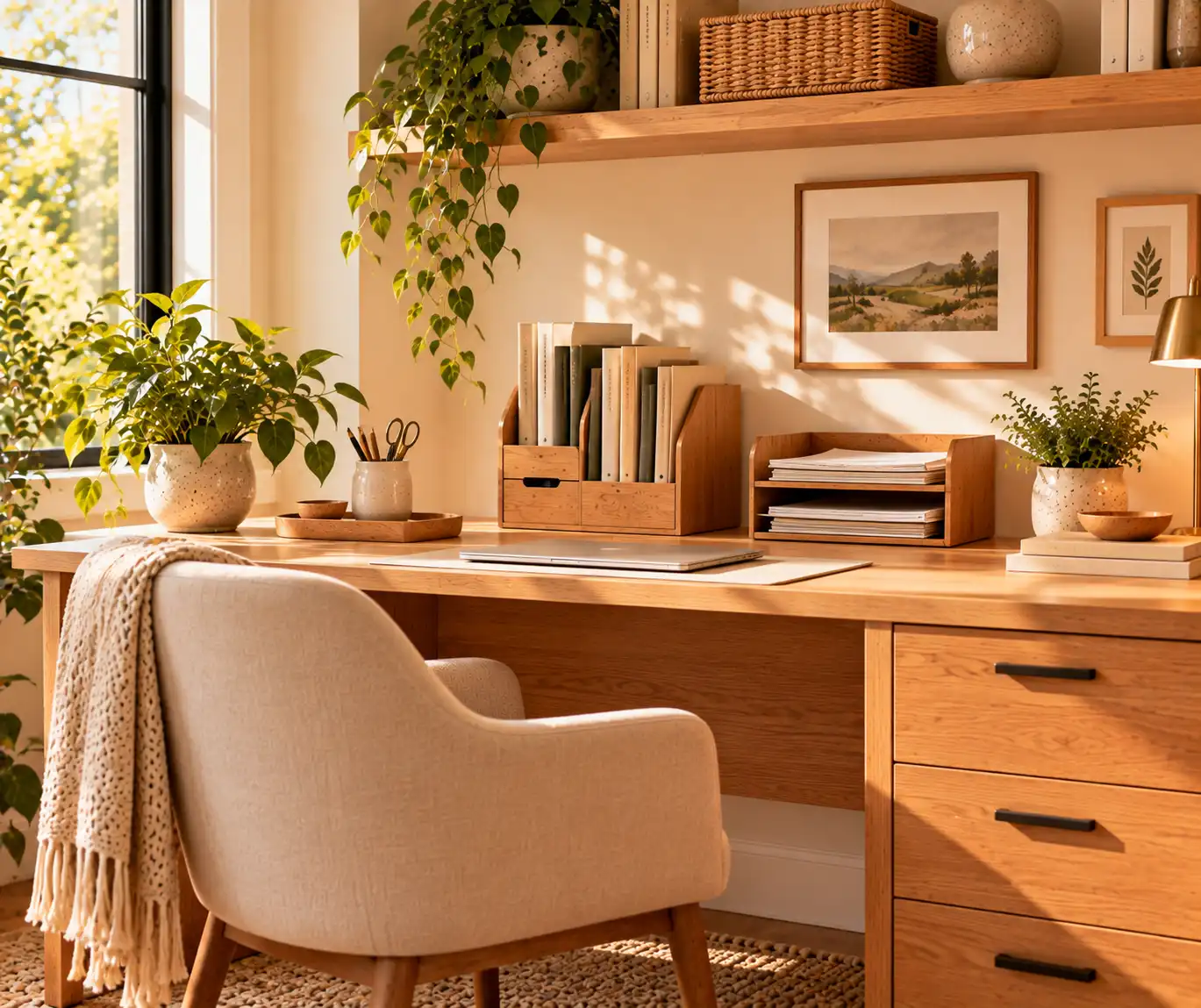
Paperwork can quickly take over kitchen counters, desks, and other surfaces. Creating one dedicated place for important papers can make them easier to manage.
A file box, drawer organizer, folder system, or small cabinet can work depending on how much paperwork you handle. Keep important documents separate from papers that can be recycled or discarded.
Try to deal with new papers regularly rather than allowing a large pile to build up. A simple system is easier to maintain than an overly complicated one.
10. Declutter Before Adding More Storage
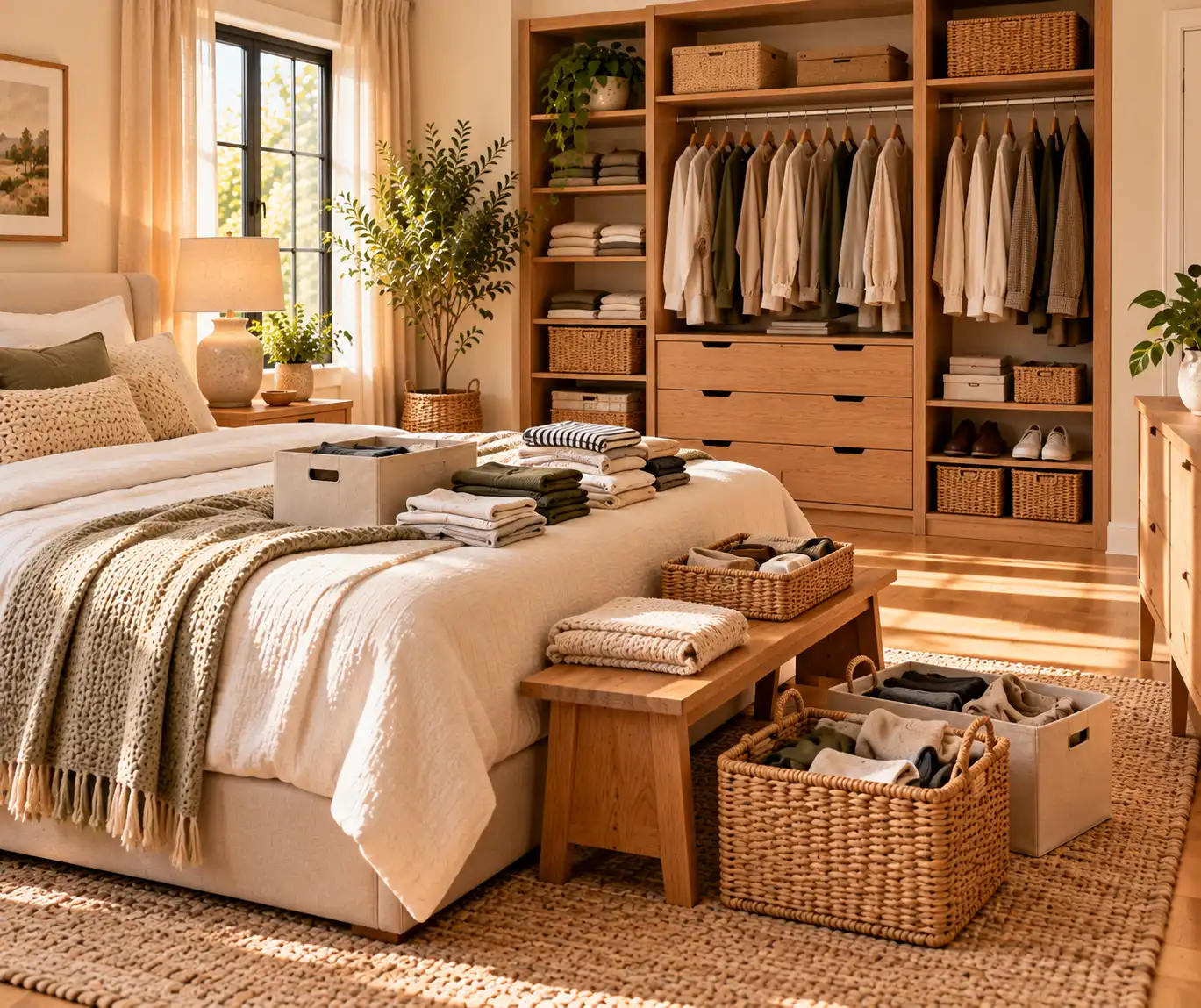
Buying more storage is not always the answer. Sometimes the best first step is deciding what you actually need to keep.
Go through one small category at a time, such as old clothes, unused kitchen tools, duplicate accessories, or items that have been sitting untouched for months.
Once unnecessary items are removed, you may discover that the storage you already have is enough. The remaining belongings are also easier to organize because there is less competing for space.
Simple Steps to Keep Your Home Organized
Getting organized is one thing; keeping it that way is another. The easiest system is usually one that fits naturally into your daily routine.
Try these simple habits:
- Put items back after using them. A few seconds of effort can prevent larger piles later.
- Keep frequently used items accessible. Everyday objects should not require complicated storage.
- Do a quick evening reset. Return misplaced items before the day ends.
- Clear one surface regularly. A clean counter or table can make the whole room feel calmer.
- Review storage occasionally. Remove things that no longer have a purpose.
- Avoid overfilling containers. Storage works better when there is enough room to put things away easily.
- Organize by category. Keep similar items together so they are easier to find.
You do not need a perfect home. The goal is to create systems that make everyday life easier and help clutter stay manageable.
Final Thoughts
Good home organization is less about making every room look perfect and more about giving everyday belongings a sensible place. Once items have a clear home, cleaning up becomes much easier.
Start small. A single drawer, shelf, countertop, or entryway can be enough for your first project. Once that area works well, move on to another part of the home.
The best home organization ideas are the ones you can actually maintain. Keep your systems simple, leave some breathing room in your storage, and focus on making your home easier to live in.
Frequently Asked Questions
How do I start organizing my home?
Start with one small area instead of trying to organize the entire house. Remove items that do not belong there, group similar things together, and give the remaining items clear storage places.
How can I keep my home clutter-free?
Give frequently used items a designated place and return them after use. Regularly clearing visible surfaces and reviewing belongings can also help prevent clutter from building up.
Should I declutter before organizing?
Yes, it can help. Removing items you no longer need gives you a better idea of how much storage you actually require and makes the remaining belongings easier to organize.
What is the best storage solution for a small home?
Use vertical storage, under-bed containers, floating shelves, multi-purpose furniture, and closed cabinets where practical. Keeping surfaces clear can also help a small space feel less crowded.
How can I organize without buying lots of storage products?
Start by using what you already have. Reuse baskets, boxes, drawers, shelves, and containers before purchasing anything new. Rearranging existing storage can often solve simple organization problems.
How do I organize a home that gets messy quickly?
Make the storage system easy to use. Everyday items should have convenient places nearby, and putting things away should require as few steps as possible. A short daily reset can also prevent small messes from becoming larger ones.