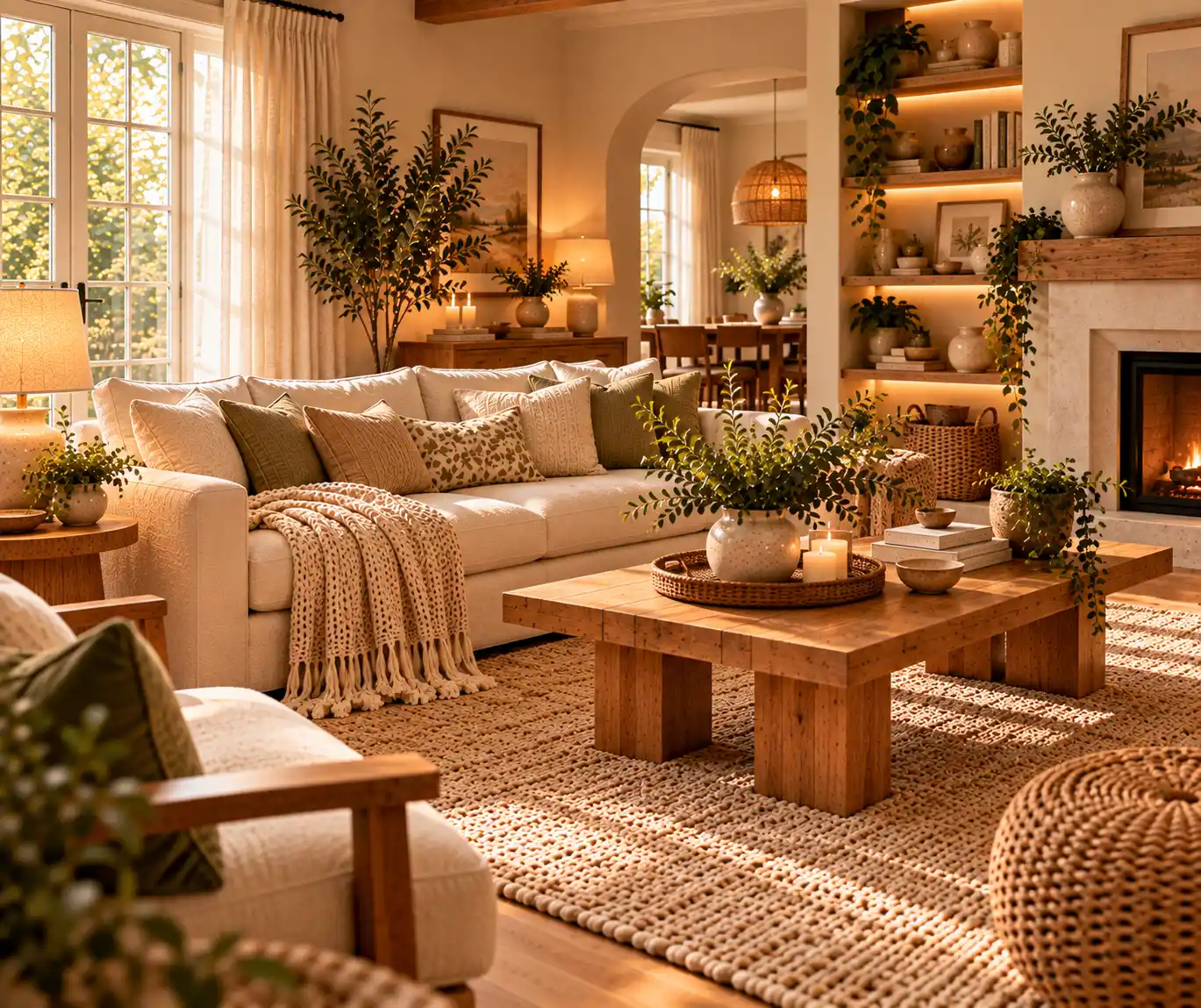
A cozy home does not need to be filled with decorations. Often, the right mix of warm colors, soft textures, natural materials, and comfortable furniture is enough to make a room feel inviting.
These cozy home decor ideas are simple enough to use in different rooms and flexible enough to suit many decorating styles. You can start with small changes, such as adding textured cushions or warmer lighting, and build from there.
The best part is that many of these ideas can work with pieces you already own. A little rearranging, layering, and thoughtful styling can make your home feel more comfortable without making it look crowded.
Small updates can make a noticeable difference when they work together. For more decorating inspiration, explore the Home Inspiration category on LivingNovaHub.
1. Start With a Warm Neutral Color Palette
Color has a big effect on how a room feels. Warm white, cream, beige, taupe, soft brown, and muted earthy shades can give a home a calm and comfortable appearance without feeling too heavy.
You do not need to repaint every wall to introduce warmer tones. Try bringing them in through cushions, curtains, rugs, throws, artwork, or smaller decorative pieces. Keeping larger furniture neutral also makes it easier to change the look later.
For a little contrast, add natural wood or a deeper brown accent. The combination keeps the room interesting while maintaining a soft and welcoming mood.
2. Layer Soft Textures Throughout the Room
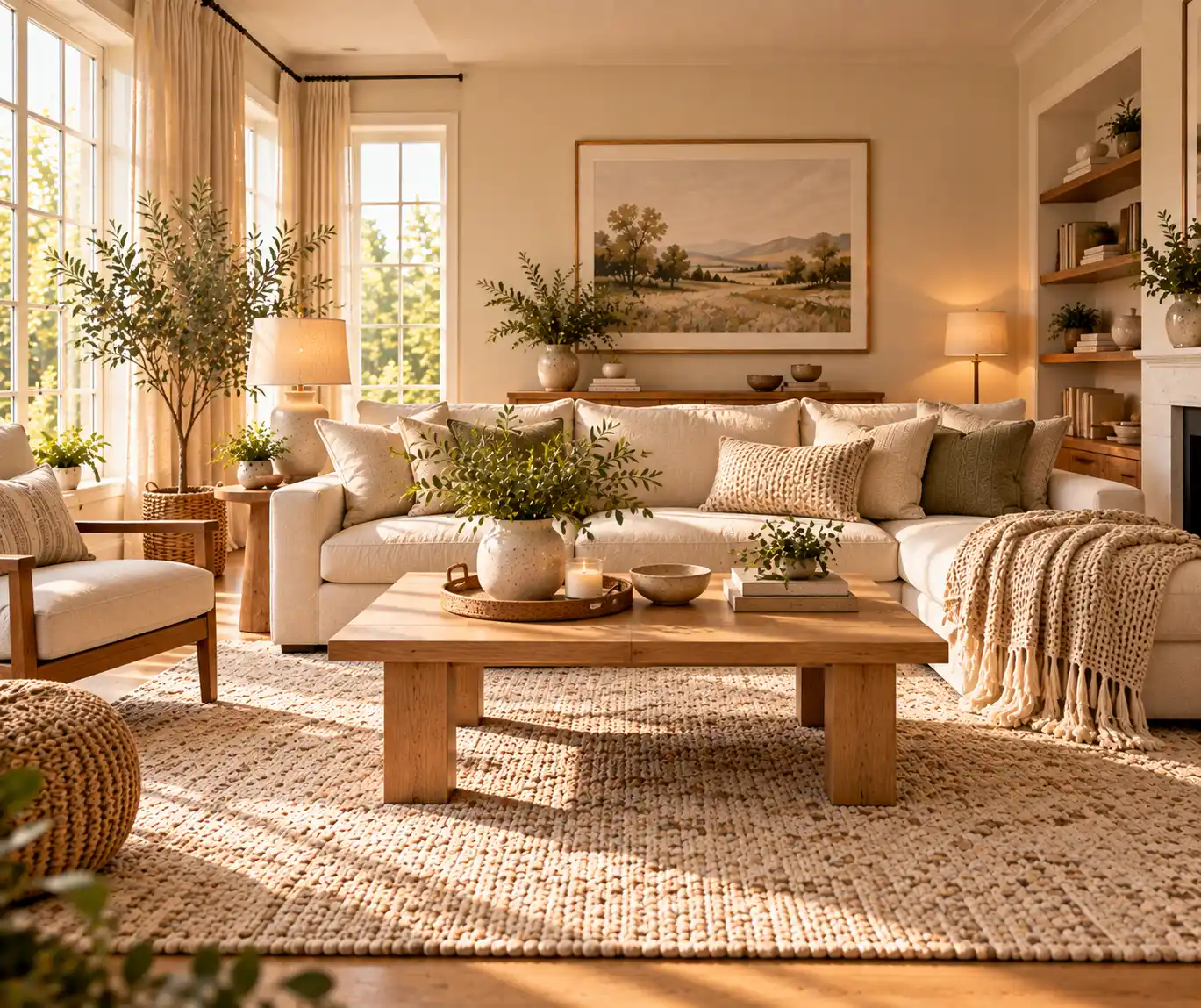
A room can feel cozy even with simple furniture when different textures are layered together. Think linen, cotton, wool, boucle, woven fibers, wood, ceramic, and soft rugs.
Start with a few easy additions rather than changing everything. A chunky throw over a sofa, textured cushions on a chair, or a woven basket beside a cabinet can add depth without making the room look busy.
Try to mix textures instead of using the same material everywhere. Smooth surfaces paired with soft or woven pieces create a more relaxed and natural look.
3. Add Warm and Comfortable Lighting
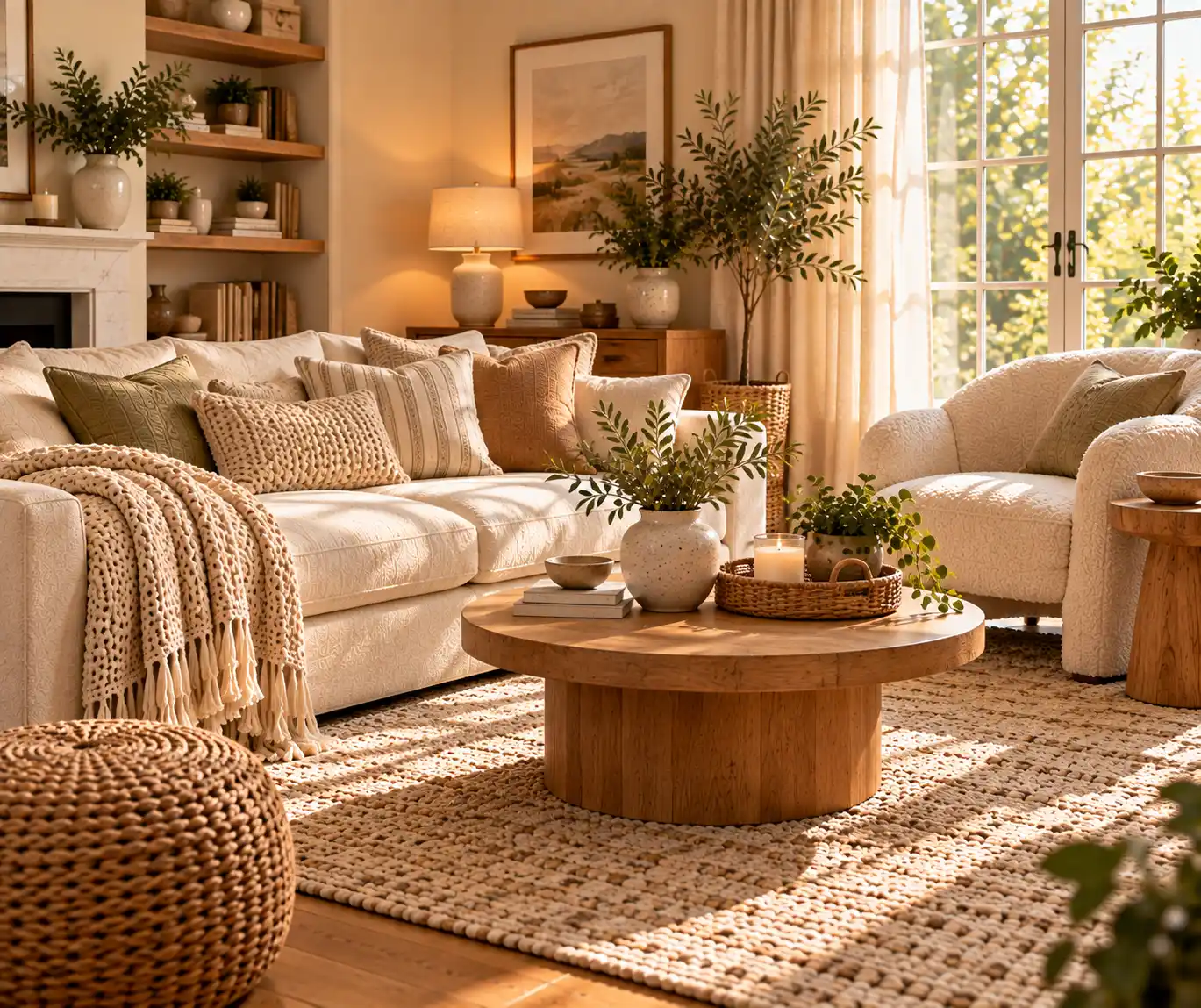
Lighting can completely change the feeling of a room. Bright overhead lighting may be useful for everyday tasks, but softer sources can make the space feel much more relaxing in the evening.
Use table lamps, floor lamps, wall lights, or small decorative lamps to create pools of warm light around the room. Place them near seating areas, beside beds, or on consoles where an extra glow is useful.
Instead of relying on one central light, combine several smaller light sources. This creates a softer atmosphere and makes the room feel more layered.
4. Bring in Natural Wood Elements
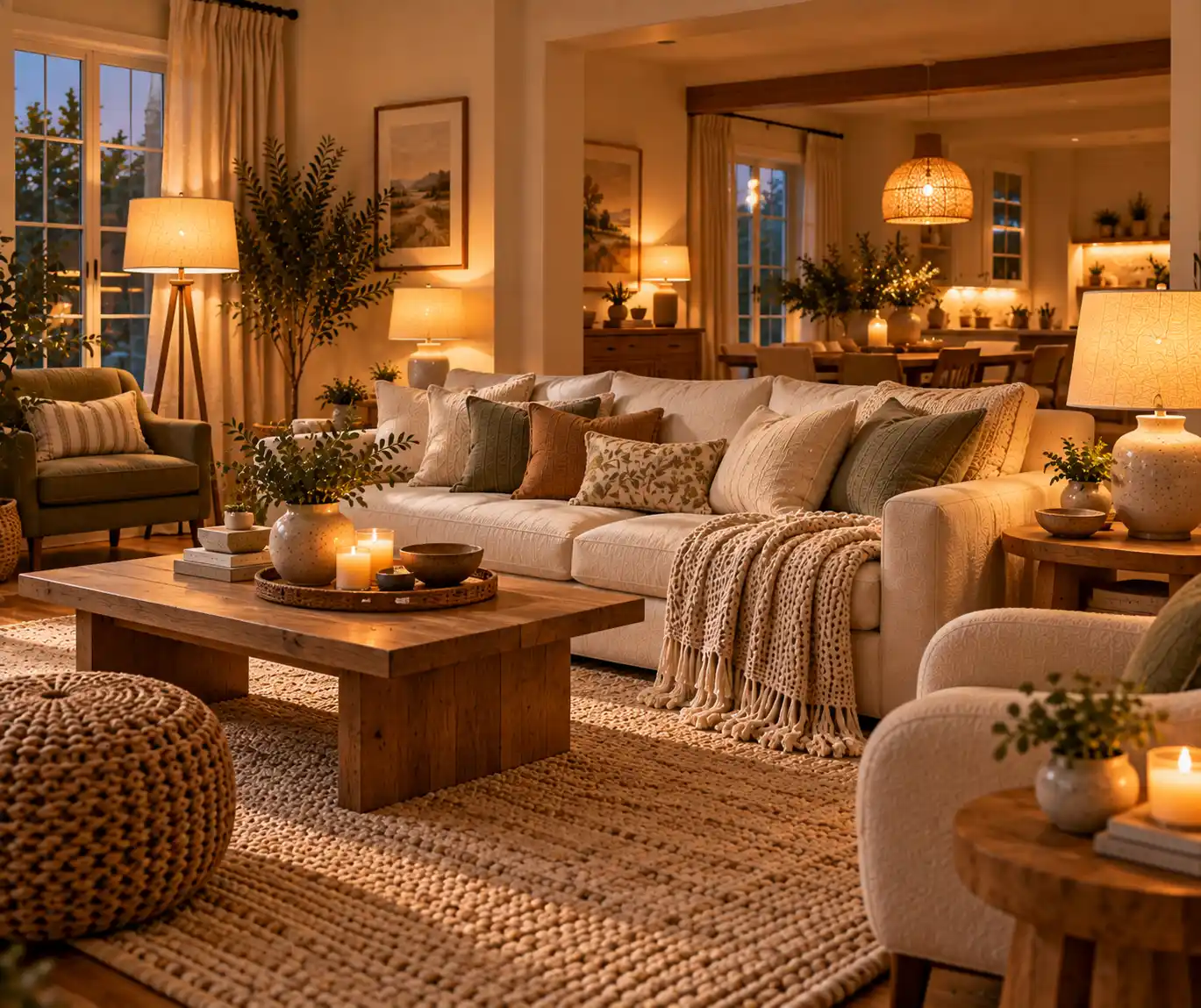
Natural wood adds warmth without needing a lot of decoration. A wooden coffee table, sideboard, bench, shelving unit, or small stool can give a room a more grounded and comfortable feel.
Lighter oak works beautifully with cream and beige interiors, while medium or darker wood can create more contrast. You can also use smaller wooden accessories if you do not want to replace your furniture.
Pair wood with soft textiles and simple ceramics for an easy, balanced look. The combination feels natural and works well with modern, rustic, Scandinavian, and organic-inspired interiors.
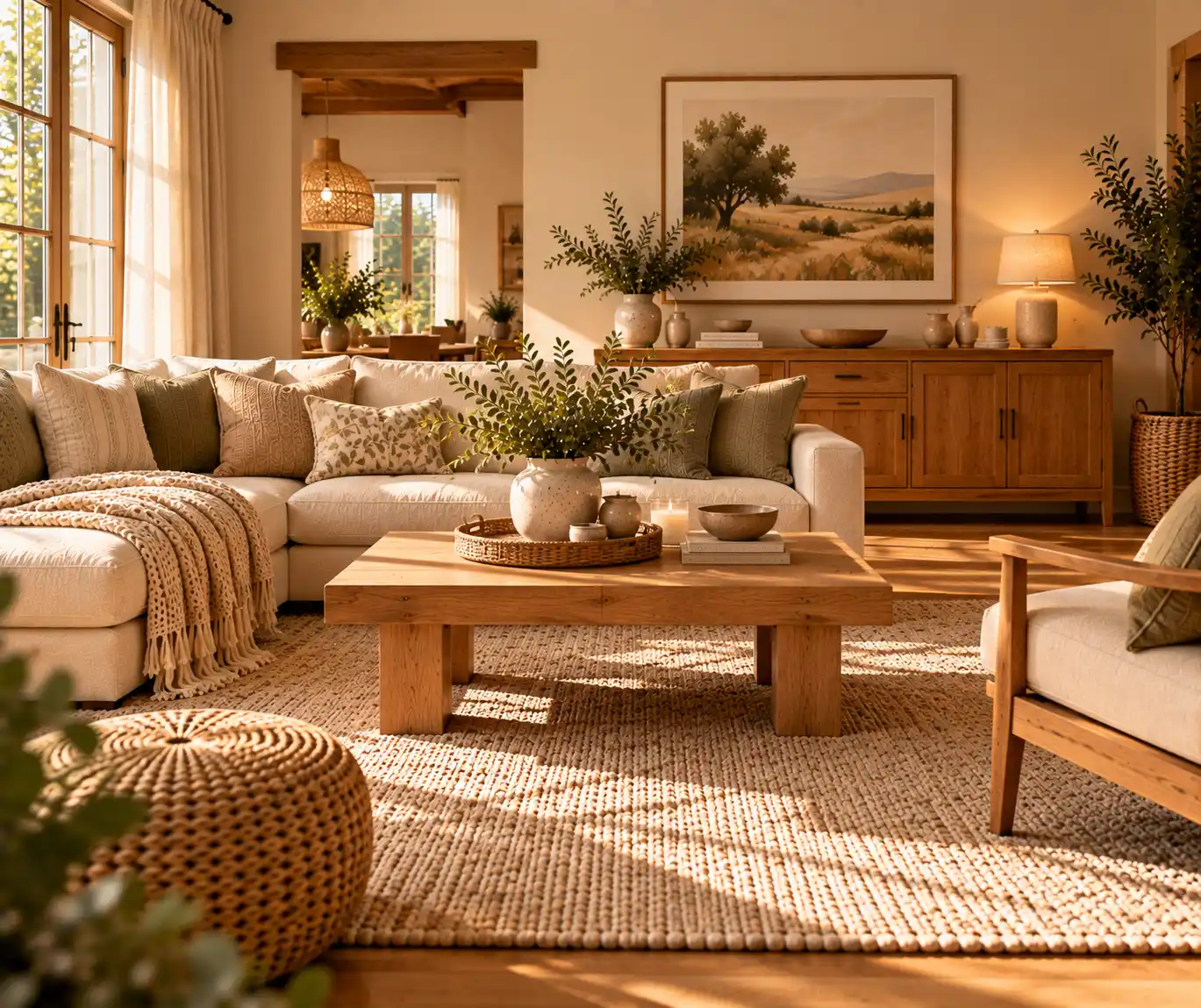
5. Make the Sofa the Coziest Spot in the Room
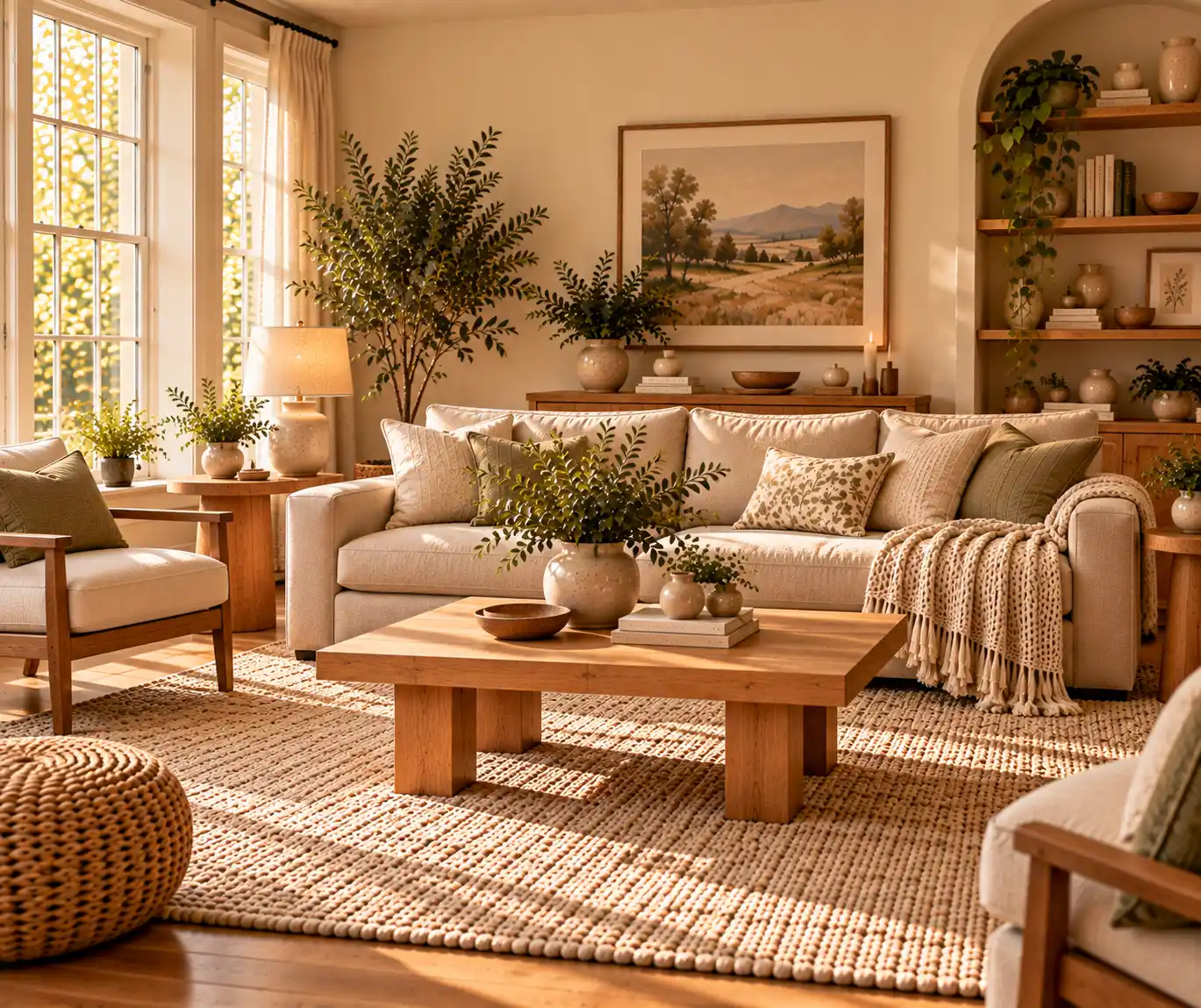
The sofa often becomes the main gathering place in a home, so it deserves some extra attention. A comfortable throw and a few well-chosen cushions can make it feel much more inviting.
Try mixing cushion sizes and textures rather than using identical pieces. Keep the main colors connected to the rest of the room so the sofa looks styled rather than overloaded.
A soft rug underneath the seating area can also help define the space. Leave enough clear floor around the furniture so the arrangement still feels comfortable and easy to move through.
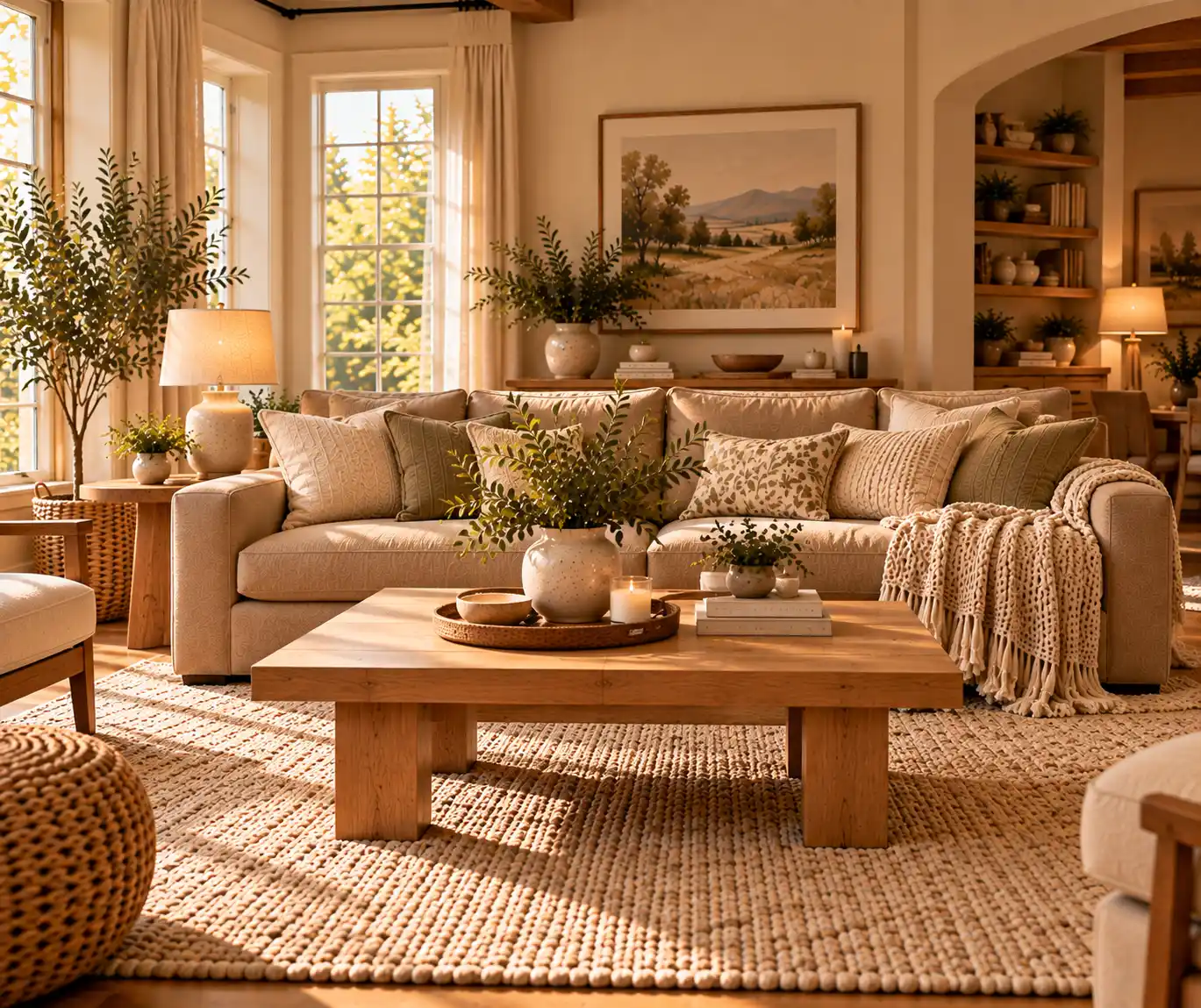
6. Use Rugs to Add Warmth Underfoot
A rug can make furniture feel more connected while adding softness to the room. It is especially useful in living rooms, bedrooms, and other areas where you want a warmer and more comfortable atmosphere.
Choose a size that works with the furniture arrangement. In a living room, a rug that sits under at least part of the main seating area can help anchor the space.
Neutral rugs with subtle patterns are easy to style, while woven or textured designs can add visual interest without becoming the main focus.
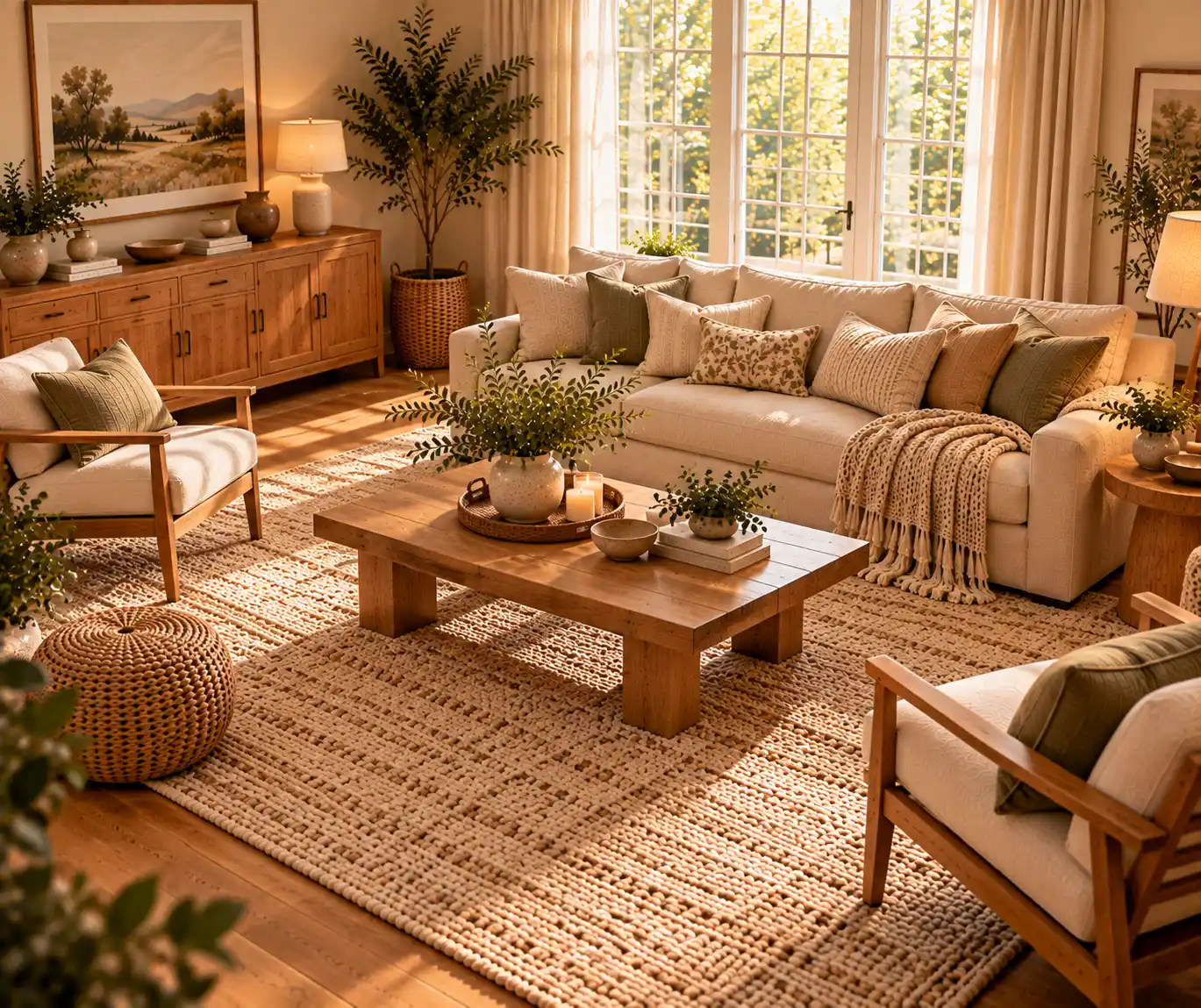
7. Add Greenery for a Fresh Touch
A few plants can bring color and life into an otherwise neutral room. You do not need a large collection of plants to get the effect.
A tall plant can fill an empty corner, while a small plant can sit on a shelf, side table, or console. Choose planters that work with your existing decor, such as ceramic, terracotta, woven, or simple neutral designs.
If caring for live plants is not practical, realistic faux greenery can still provide a decorative touch. Keep the arrangement simple so it supports the room rather than taking over.
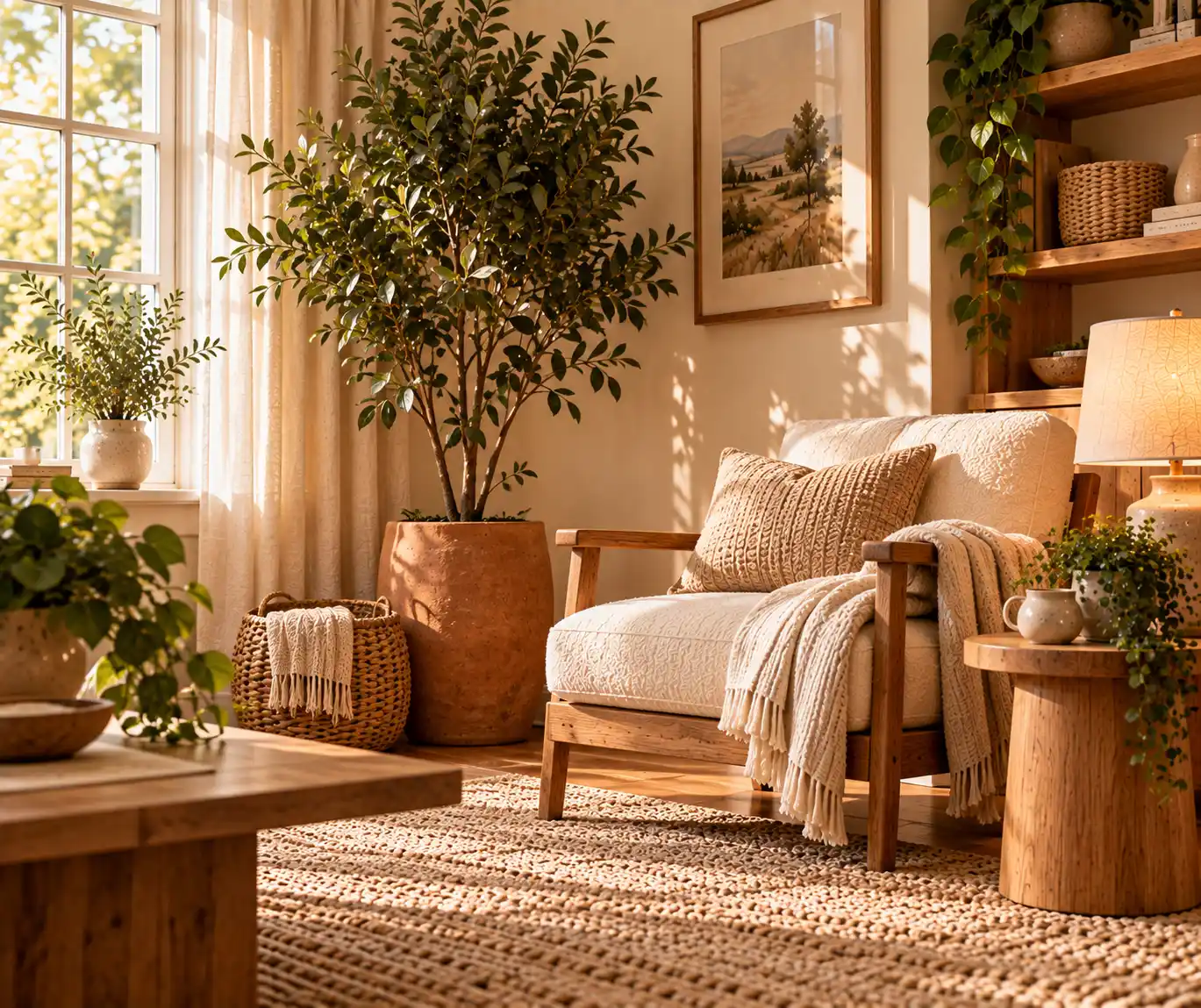
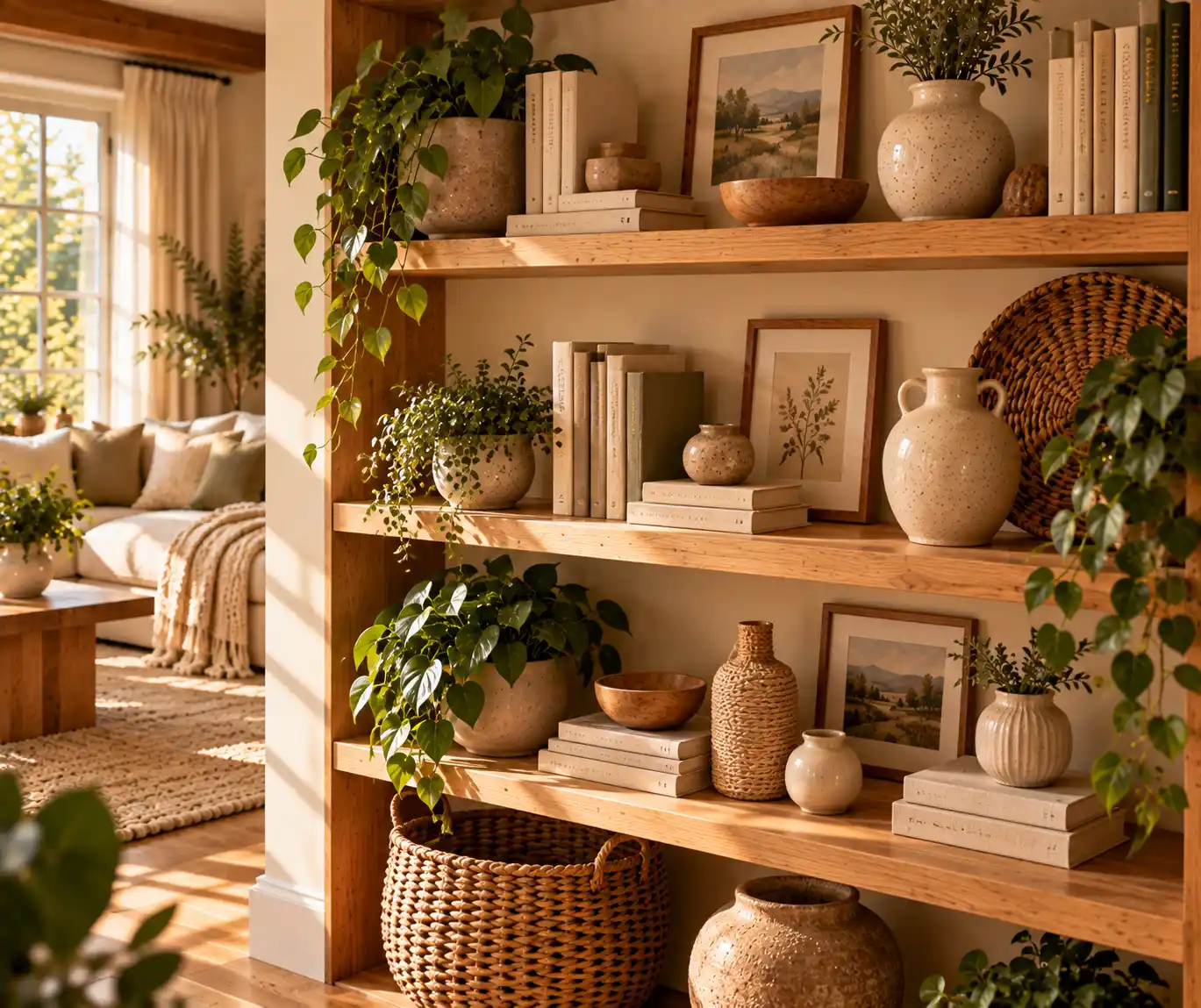
8. Style Shelves With a Simple Mix of Decor
Open shelves can easily become cluttered, so a little restraint helps. Instead of filling every space, leave some open areas between books, ceramics, framed artwork, and decorative objects.
Use different heights to create a balanced arrangement. A small vase can sit beside stacked books, while a taller object or plant can add height to another part of the shelf.
Keep the color palette connected to the room. Cream, wood, soft brown, muted green, and earthy ceramic tones can work together without making the shelves feel overly coordinated.
9. Create a Comfortable Reading or Relaxing Corner
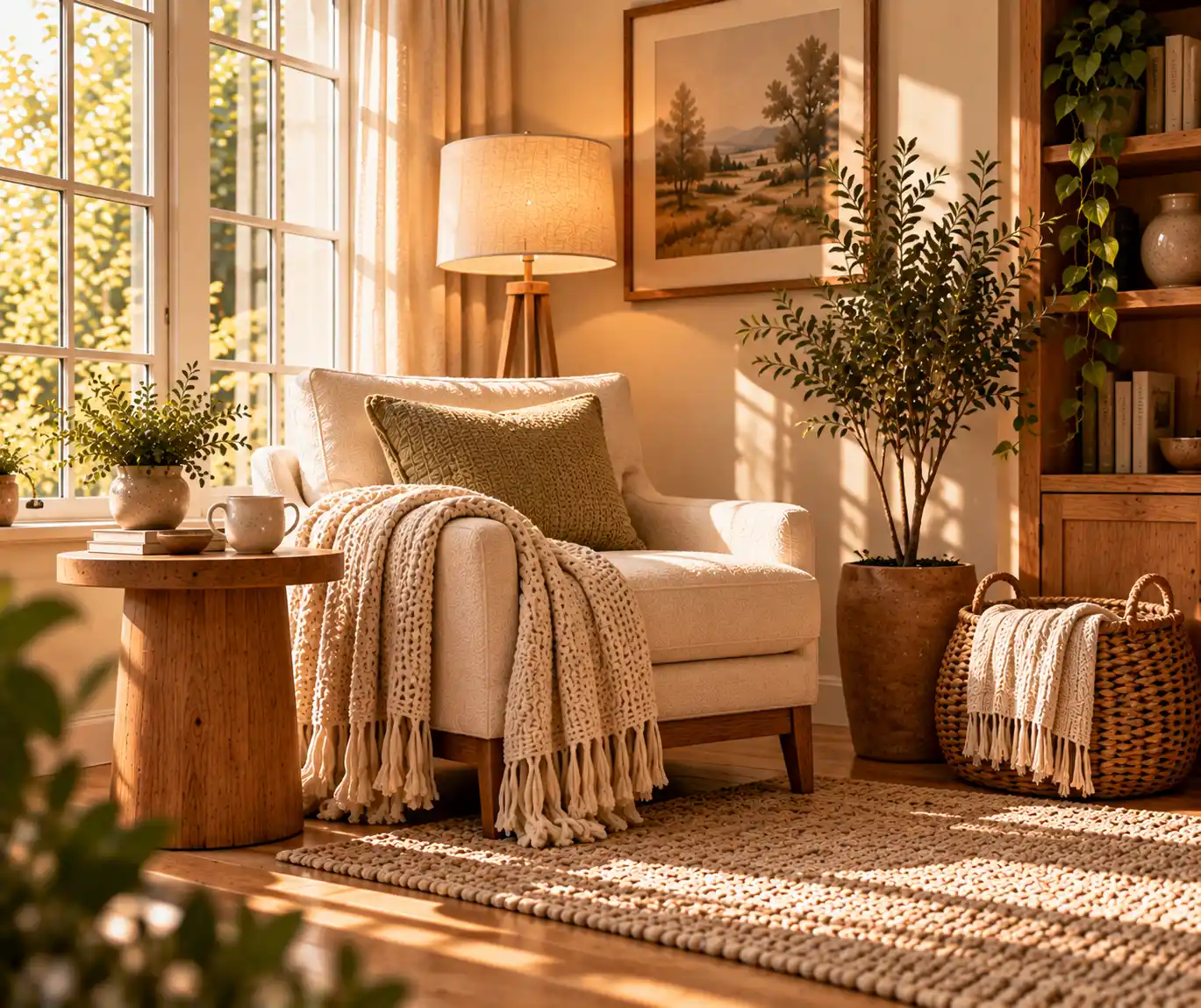
Even a small unused corner can become a cozy part of the home. A comfortable chair, small side table, soft cushion, and reading lamp may be all you need.
Position the chair near natural light if possible. A window corner can make a lovely daytime spot, while a floor lamp can make the area useful in the evening.
Keep the surrounding area simple. A small rug or basket can add warmth without taking up much space, making the corner feel intentional rather than forgotten.
10. Keep the Decor Simple and Clutter-Free
Cozy does not mean crowded. Too many accessories can make a room feel visually heavy, especially when furniture and decorative pieces are already competing for attention.
Start by removing items that no longer serve a purpose. Then bring back a few pieces you genuinely like. A favorite vase, framed print, candle holder, basket, or decorative bowl can have more impact when it has enough space around it.
Give frequently used surfaces some breathing room. Clear coffee tables, nightstands, and consoles can make the whole room feel calmer while still allowing personality to come through.
Simple Ways to Make Your Home Feel More Cozy
You do not need to redecorate the entire house at once. Start with a few small changes that make the biggest difference.
- Warm up the lighting: Add a table lamp or floor lamp where the room feels too bright or flat in the evening.
- Layer textiles: Mix cushions, throws, curtains, and rugs in complementary colors and textures.
- Rearrange furniture: Try a new layout before buying anything. Moving a sofa or chair can change the flow of a room.
- Add natural materials: Wood, rattan, linen, cotton, and ceramics can bring warmth and texture.
- Leave some empty space: Not every shelf, table, or corner needs decoration.
- Use what you already have: Move artwork, cushions, baskets, or accessories between rooms for a fresh look.
- Choose meaningful pieces: A few items you genuinely love often feel more personal than a room filled with random decor.
Final Thoughts
The most inviting homes usually balance comfort with simplicity. Warm colors, soft textures, natural materials, and gentle lighting can work together to create a space that feels relaxed without looking overdecorated.
These cozy home decor ideas do not require you to replace everything you own. Start with one area that feels unfinished or uncomfortable, then make a few thoughtful changes using pieces that fit your style.
A cozy home should feel personal and easy to live in. Focus on comfort first, keep the styling natural, and let your favorite details become part of the room.
Frequently Asked Questions
How can I make my home cozy on a budget?
Start with items you already own. Rearrange furniture, layer existing cushions and throws, change the lighting, and move artwork or accessories between rooms. Small textile and styling updates can make a room feel warmer without a major renovation.
What colors make a home feel cozy?
Warm neutrals such as cream, beige, taupe, warm white, soft brown, and earthy shades are easy choices. You can also add muted sage green, terracotta, or soft blue for gentle color.
How do I make a small room feel cozy without making it crowded?
Use furniture that fits the room, keep walking paths clear, and avoid filling every surface with decor. Light colors, mirrors, smart storage, and layered lighting can help the room feel more open while still feeling comfortable.
What textures work well for cozy home decor?
Linen, cotton, wool, boucle, woven fibers, natural wood, rattan, ceramic, and soft rugs all work well. Combining several different textures adds depth without needing lots of decorative objects.
How can lighting make a home feel cozier?
Use several smaller light sources instead of relying only on one ceiling fixture. Table lamps, floor lamps, wall lights, and other warm lighting sources can create a softer and more comfortable evening atmosphere.
Does cozy home decor have to be expensive?
No. Cozy home decor can be created through rearranging furniture, using secondhand pieces, adding affordable textiles, repurposing accessories, and making small styling changes. You can improve the atmosphere without replacing everything.